Showing posts with label books. Show all posts

Saturday, September 24, 2016

The art of bookplates: disappearing beauty in a digital age


The bookplate is one of the unrecognized losses of the print empire (like a once-mighty imperial force, the artforms of type and the book are retreating before the digital demands of a new order). Where first-editions and beloved books in a personal library were at one time marked as belonging to an individual through bookplates, the internet no longer requires an Ex Libris stamp.


That leaves the collecting of antique bookplates -- a print adjunct dating back almost to the age of Gutenberg -- to a vigilant group of bibliophiles, who occasionally share their finds with the world at large -- if the contemporary world, at least, might see these miniatures as works of art.


Ex Libris: The Art of Bookplates (Yale University Press), by Martin Hopkinson, presents 100 examples of the book-owner's pride, mostly from the early 1900s when printing and mass-distribution made the ownership of books affordable to many. The idea of a private library (once only a luxury) also reflected ideas of education and a growing amount of leisure time in the middle class.


The bookplate became a personal expression of the book-owner's interests and passions. In one, for the scientist experimenting with rats at the University of Rochester, the artist Stephen Gooden drew an owl proudly claiming his rodent prize. When Ethel Luce-Clausen saw the bookplate he had designed for her, Gooden explained simply, "the rat crept in when I wasn't looking."

Most bookplates are more sedate reflections of their owner's personality, although one from the 1970s included in a slideshow at the Guardian UK might give Aubrey Beardsley a start. 
The bookplate may be a diminished art but one that retains its small beauty in this digital age. It's good to have Hopkinson's collection (from the British Museum) to remind readers that there are advantages to print that the world of ones-and-zeroes can never replace.

Sunday, September 11, 2016

"Forgotten Bookmarks": the relationship between readers and writing


The website of a used-book seller, Forgotten Bookmarks, posts the ephemera left behind in used books. What gets left behind between pages is probably just as good as any human time capsule encased in stone, and much easier to retrieve at will, too, before a hundred years have passed.

These are books bought for a thousand occasions: novels to pass the time on vacation, books as gifts, textbooks as schoolroom drudgery, library books never returned. In each case the variety of forgotten and left behind items posted here shows readers in a hurry to part with the printed page. These can be tantalizing and incomplete clues to the reading life: advertising counts for a surprising amount of book-mark material, as do reminders about doctor's appointments, scenic post-cards, and a wide variety of notes (sometimes of the bank kind).

For some readers it must be easier to tell a dream, a personal story, and tuck it away in a book, with no one to know. Here's an example of one remarkable retrieved night, found in a copy of Mrs. Pollifax and the Second Thief by Dorothy Gilman (1993). The Forgotten Bookmarks note and transcription: looks like a page from a journal or dream notebook.
Saturday, July 26, 2008

2nd AM of 2 powerful dreams.
Yesterday: woke up from maybe couple hours of progressive dreams: me from younger to older. 1st really erotic dream I can remember having. Bill was downstairs, though; Murphy's whining at door brought me to consciousness. (the same Murphy who needed to go out and 
is not getting tummy rubs to my left)
This AM: vivid regressive dreams - born though (what?) maybe seven lifetimes. Part-way through I knew in dream that I'd been through "older lives." Two brothers, a sister? Boys had different fathers. Smarter one aged more quickly than less gifted, but sweeter, brother. A sort of Lex Luthor/Marvel Comics/radiation thing I was "burned?" at some point in my life?
Woke up just b-4 6 AM. Bill facing me - my reality touchstone. Ernie was slightly erect, became more so with (rather insistent on my part) stroking. Lower back/pelvis killing me; remembered stomach/ab contraction can ease pain, so did that. Realized dream sequence and got conscious enough to realize that waking Bill wasn't fair. Left Ernie to rest, kissed my beloved, patted/scratched Murphy with my foot while reaching for journal and pen, Had to pee, so did that, then got book's (??) dog to go downstairs. He had to pee - long night for him - and now we are on couch w/Murphy properly curled up to my left my R wrist properly braced, and me pondering the powerful dreams showing me that I am coming into the kairostic moment of being not in my past nor in my future, but the true present. And I can get my life in order, my finances - my heart, soul, body - and not only God but also life is good - all the time.
Thank you.
That closing remark -- "thank you" -- is the mystifying piece, as if the note was addressed to the dream self. Many of the notes have no such narrative to frame them. Here is another, with helpful but intriguing notes from the blog's curator: Found in "Apollo: An Illustrated Manual of the History of Art Throughout The Ages" by S. Reinach. Published by Charles Scribner's Sons, 1935. Short note, looks like the start of a story. Most of the page is missing:
March 31st - '36
Written Feb. 21 '37
Sun. Eve.

Twilight had settled over the small city.

A girl came out of a hotel ...

stepped into a car at the...(other side)

caused it to glide so easily over the ground and then too, there was the dip in the road just ahead, so the girl said "Let it go."

The machine leaped forward but so did...

dog, from the side of the road, at the...


...instant...
The site's past posts indicate a new years' tragedy of burst water pipes, a paper-trader's nightmare. It might be worth a browse to offer condolences. If you're in the mood you might contact the bookseller and offer your own scans of lost-and-found used book items. Here's a recent post, with photos.
... I wanted to get an early start this morning, as with yesterday's holiday, we would have twice the orders to wrap up and get out. I was in by 7:30 or so, and the first thing I noticed when I walked in the door was that there was a big puddle. At first I thought some snow might have drifted under the door and melted, as the winds were high last night. Then I heard the sound. The great hissing of the beast.

It took me a second to realize what had happened and what I had to do. I sloshed though the water and over to the main shut-off. The hissing quieted, then stopped. I got up off the floor and took a good look; it was still mostly dark outside, and the only light was from the EXIT sign above the door. I noticed the reflection on the floor, rippling. This wasn't just a little water. It's a good thing I wore my boots.

Thank you for indulging me a bit. I'm a little overwhelmed. And sad. And angry... but I wanted to let you know where I've been this morning. For a moment, I wondered what I was doing here on Blogger in the middle of this emergency, but I realized that you all are my friends, and I'm here to share news with you, good or bad. Today is not good, but we're all alive and it appears that we have only lost about $10,000 in books or so. It could have been a lot worse...
The pipe burst right behind my desk, where we keep a lot of the expensive books, and where I keep all the forgotten bookmarks. I lost most of them. 

A loss of "about $10,000" in used books is sad news indeed, though the lost volumes will undoubtedly be replaced with more used books. But the bookmarks and other ephemera of the individual reading life are irreplaceable.

Tuesday, June 3, 2014

Ralph Steadman's "Alice" to be part of London's "Books About Town" bench project


While the new UK secretary of education, Michael Gove, erases American literature from the British curriculum, this summer Britain gives its citizens a restful place to read the national classics, profusely illustrated -- and eminently practical. 

The online site of the UK's Made in Shoreditch Magazine reports on this summer's London park project:

This summer, benches shaped like open books will pop up all over the capital for children, families and visitors to find and enjoy. ‘Books about Town’ launched by the National Literacy Trust and Wild in Art brings a unique opportunity for the public to view 50 bench sculptures across the city, created by both local artists and famous names, to celebrate London’s literary heritage and reading for enjoyment. 

.. Axel Scheffler has illustrated a bench which celebrates his work with Julia Donaldson and the characters they’ve created together, including The Gruffalo and characters from their new book The Scarecrow’s Wedding. The bench is being sponsored by Scheffler’s and Donaldson’s publishers: Scholastic Children’s Books and Macmillan Children’s Publishing.


Among the other top artists involved is Ralph Steadman who illustrated Lewis Caroll’s children’s classic Alice Through the Looking Glass in 1973 and has reproduced some of these illustrations on a unique BookBench. Children’s authors Lauren Child and Cressida Cowell have each designed benches based on their own series Clarice Bean and How To Train Your Dragon. Walker Books are sponsoring their very own We’re Going on a Bear Hunt themed BookBench, which will be illustrated by Helen Oxenbury.


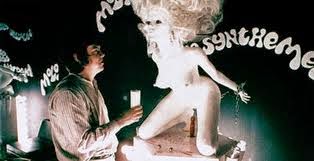
Imagine what this project could suggest in the future for public statuary based on sci-fi, fantasy, and romance fans. A park fountain in the form of Lucy from Burgess' A Clockwork Orange, anyone? Visit Made in Shoreditch for more info and links about this summer's "Books About Town." Burgess' Korova Milk Bar maiden supplying drinks laced with synthemesc and drencrom will have to wait for another summer season, apparently.


Thursday, May 15, 2014

The 1970s mysterious "Codex Seraphinanus" gets a lavish new Rizzoli edition


"Luigi Serafini is an Italian graphic artist famous for his unusual and obscure works such as the Codex Seraphinianus. Born in Rome in 1949, Serafini began his career as an architect before creating the Codex Seraphinianus; he also authored the Pulcinellopedia Piccola. Serafini has also worked with the media of industrial design, film, and theater, and has also written stories for Italian magazines." (Luigi Serafini's Wikipedia entry, in full.)

The "Codex Seraphinianus" has been published in a new edition by Rizzoli.  The book first appeared in the 1970s, a phantasmagoria of strange images and the artist's own made-up language, and has since created a reputation as "the most mysterious book in the world."  The website Dangerous Minds has posted an interview with Rizzoli's Charles Meyers, who confirms that the author is still very much alive with homes in Rome and Milan. He also confirms that Luigi Seraphini is "absolutely a real person and he speaks very good English," and that he is still drawing his mysterious images.

Seraphini (his website is currently a blank page, whether by artful intent or mythic accident) contributed new drawings and text in the new edition, as well as a DeCodex, in which he states that a stray white cat that joined him while he created the book in Rome in the 1970s was actually the real author, telepathically guiding Serafini as he drew and “wrote."


Tuesday, August 27, 2013

"Forgotten Bookmarks": the traces of readers, left behind in books


The website of a used-book seller, Forgotten Bookmarks, posts the ephemera left behind in used books. What gets left behind between pages is probably just as good as any human time capsule encased in stone, and much easier to retrieve at will, too, before a hundred years have passed.

These are books bought for a thousand occasions: novels to pass the time on vacation, books as gifts, textbooks as schoolroom drudgery, library books never returned. In each case the variety of forgotten and left behind items posted here shows readers in a hurry to part with the printed page. These can be tantalizing and incomplete clues to the reading life: advertising counts for a surprising amount of book-mark material, as do reminders about doctor's appointments, scenic post-cards, and a wide variety of notes (sometimes of the bank kind).

For some readers it must be easier to tell a dream, a personal story, and tuck it away in a book, with no one to know. Here's an example of one remarkable retrieved night, found in a copy of Mrs. Pollifax and the Second Thief by Dorothy Gilman (1993). The Forgotten Bookmarks note and transcription: looks like a page from a journal or dream notebook.
Saturday, July 26, 2008

2nd AM of 2 powerful dreams.
Yesterday: woke up from maybe couple hours of progressive dreams: me from younger to older. 1st really erotic dream I can remember having. Bill was downstairs, though; Murphy's whining at door brought me to consciousness. (the same Murphy who needed to go out and 
is not getting tummy rubs to my left)
This AM: vivid regressive dreams - born though (what?) maybe seven lifetimes. Part-way through I knew in dream that I'd been through "older lives." Two brothers, a sister? Boys had different fathers. Smarter one aged more quickly than less gifted, but sweeter, brother. A sort of Lex Luthor/Marvel Comics/radiation thing I was "burned?" at some point in my life?
Woke up just b-4 6 AM. Bill facing me - my reality touchstone. Ernie was slightly erect, became more so with (rather insistent on my part) stroking. Lower back/pelvis killing me; remembered stomach/ab contraction can ease pain, so did that. Realized dream sequence and got conscious enough to realize that waking Bill wasn't fair. Left Ernie to rest, kissed my beloved, patted/scratched Murphy with my foot while reaching for journal and pen, Had to pee, so did that, then got book's (??) dog to go downstairs. He had to pee - long night for him - and now we are on couch w/Murphy properly curled up to my left my R wrist properly braced, and me pondering the powerful dreams showing me that I am coming into the kairostic moment of being not in my past nor in my future, but the true present. And I can get my life in order, my finances - my heart, soul, body - and not only God but also life is good - all the time.
Thank you.
That closing remark -- "thank you" -- is the mystifying piece, as if the note was addressed to the dream self. Many of the notes have no such narrative to frame them. Here is another, with helpful but intriguing notes from the blog's curator: Found in "Apollo: An Illustrated Manual of the History of Art Throughout The Ages" by S. Reinach. Published by Charles Scribner's Sons, 1935. Short note, looks like the start of a story. Most of the page is missing:
March 31st - '36
Written Feb. 21 '37
Sun. Eve.

Twilight had settled over the small city.

A girl came out of a hotel ...

stepped into a car at the...(other side)

caused it to glide so easily over the ground and then too, there was the dip in the road just ahead, so the girl said "Let it go."

The machine leaped forward but so did...

dog, from the side of the road, at the...


...instant...
 
The site's past posts indicate a new years' tragedy of burst water pipes, a paper-trader's nightmare. It might be worth a browse to offer condolences. If you're in the mood you might contact the bookseller and offer your own scans of lost-and-found used book items. Here's a recent post, with photos.
... I wanted to get an early start this morning, as with yesterday's holiday, we would have twice the orders to wrap up and get out. I was in by 7:30 or so, and the first thing I noticed when I walked in the door was that there was a big puddle. At first I thought some snow might have drifted under the door and melted, as the winds were high last night. Then I heard the sound. The great hissing of the beast.

It took me a second to realize what had happened and what I had to do. I sloshed though the water and over to the main shut-off. The hissing quieted, then stopped. I got up off the floor and took a good look; it was still mostly dark outside, and the only light was from the EXIT sign above the door. I noticed the reflection on the floor, rippling. This wasn't just a little water. It's a good thing I wore my boots.

Thank you for indulging me a bit. I'm a little overwhelmed. And sad. And angry... but I wanted to let you know where I've been this morning. For a moment, I wondered what I was doing here on Blogger in the middle of this emergency, but I realized that you all are my friends, and I'm here to share news with you, good or bad. Today is not good, but we're all alive and it appears that we have only lost about $10,000 in books or so. It could have been a lot worse...
The pipe burst right behind my desk, where we keep a lot of the expensive books, and where I keep all the forgotten bookmarks. I lost most of them. 

A loss of "about $10,000" in used books is sad news indeed, though the lost volumes will undoubtedly be replaced with more used books. But the bookmarks and other ephemera of the individual reading life are irreplaceable.

Tuesday, February 5, 2013

"For the Love of Books," Ronald Shwartz: 115 writers name their favorite books


Here's a grand rainy-day idea: Ask 115 writers to write about their favorite books. What author wouldn't spend five or six pages babbling on (okay, carefully crafting) a reply about some obscure title they obsessively read as a child, or the effect of a book casually chosen that hit them like a thunderclap? Which writers, exactly, did they desperately first try to mimic? With some choice replies achingly absent -- no one expects J.D. Salinger to break his career of silence at the age of 90 -- For the Love of Books is still a fascinating and sometimes confounding pleasure.

For the Love of Books collects the stories of these 115 writers' literary educations: some are funny, many serious, and a great number surprising. John Barth's love of fable underpins his mention of The Thousand and One Nights; I wasn't expecting Kurt Vonnegut's debt to The Book of Genesis: "It's very interesting to have an origin myth, and I certainly wouldn't want to live without one." More than a few replies are echoes of near despair: books in which the writer finds a talent so monumental that they almost gave up their own writing altogether. And many of the replies open the reader to authors whose works may still be a puzzle, or yet to be read. From Pete Hammill comes mention of an unfamiliar novel also noted by Barth and Thomas McGuane:


"Epitaph of a Small Winner, by Machado de Assis, is another great novel, set in Brazil and written in Portuguese. I have maybe seven different versions of it. What's extraordinary is that it was written more than a hundred years ago yet it's so incredibly modern. First, the writing is so clean, and so about life -- it's written from the point of view of being dead. And it also has this very modernist sense that there is a collusion between the writer and the reader that's directly in the text. It's the kind of book I am incapable of writing. ... (Machado) was trying to capture, it seems to me, some essential truth about human beings ... he's saying that individuals are capable of stupidity and folly but then, in the end, you cherish them anyway. There's a warmth to the book, a kind of awed sunniness in Machado that I personally connect to." 


Elmore Leonard admires Hemingway, but admits cheerfully that "Papa was the wrong guy to imitate"; then he discovers his narrative voice in the books of Richard Bissell: "The novel that hooked me was High Water. The story is set on a tow-boat pushing eight barge-loads of coal from St. Louis to St. Paul, up the Mississippi on a flood tide." What Leonard learns from the rough-and-tumble characters of Grease Cup and the Ironhat is to develop affection for his characters, and not to take writing books too seriously: "I've learned it has to be fun or it isn't worth doing."

John Irving admires the Dickensian novelists Garcia Marquez, Salman Rushdie, Gunter Grass ("I even gave Owen Meany the same initials as Oskar Matzarath, in homage to the master"). No surprise that Frank McCourt recites the opening questions from the catechism of the Roman Catholic Church. A surprising number list The Great Gatsby and Look Homeward Angel. Of Thomas Wolfe: "not much talked about these days," Sven Birkirts notes, "and the consensus seems to be that the novels are word-zeppelins, acres of hot air over which an outer skin has been stretched ... " Still, it was Wolfe's "cloud of romanticism (that) persuaded me I wanted to be a writer -- a novelist." Wolfe's "word-zeppelin" of a book also makes the lists of Mark Strand, William Styron, Kurt Vonnegut.

From John Updike to Dave Barry, even a random glance at For the Love of Books will reveal some gem: Gertrude Stein gets her expected, modernist due, and then there'
s the fond mention by one author of Archiecomics. (Guess who.) The book is a joy-ride through contemporary literature: you may not understand Pete Hammill's esteem of Bomba, the Jungle Boy at the Giant Cataract, but here he is describing the excitement of meeting a a mutual fan:

"There couldn't be two American writers more different than me and Louis Auchincloss, but we know each other and we both have this Bomba, the Jungle Boy thing. Not long ago I ran into him in the middle of some big event at the Museum of the City of New York and he says to me, 'Pete, old boy. Do you have Bomba, the Jungle Boy at the Swamp Death? I just found a copy.' The people in our immediate vicinity thought we were insane or putting them on. But it was dead serious."

In his introduction Ronald Shwartz admits that compiling this book, while a work of deep interest and literary pursuit, was not easy. "Some correspondents were just this side of surly ... some were demure, like John Gregory Dunne ... then there were those who declined, redeclined, then acceeded, then redeclined again, and finally succumbed over the course of nine months." One of the more fascinating aspects of the book is the bibliography, which lists all the titles mentioned in the text, as well as who recommended them.

It's the reader's own to discover who likes what, who disparages whom, and who at the age of fifteen found a copy of Sherwood Anderson's Winesburg, Ohio translated into Hebrew. And some contributors just can't leave without a slash of the poison pen; On the Road gets a faint-hearted pass by the curmudgeonly P.J. O'Rourke: "not very good, either ... but so completely American that, by comparison, Walt Whitman sounds like a windy, ancient Greek. Made me think even I could write." Take that, Jack!

Sunday, February 3, 2013

Michael Korda: "technology leaps ahead and people simply adapt to it"


The dire predictions that doom the future of the printed word seem to mount daily. Not to worry: book publishing will adapt in ways undreamed of, and with a quickness that will be astonishing.

That's the hopeful forecast in this interview with Michael Korda, author and former editor-in-chief of Simon and Schuster, who's well aware that the book business will respond to the commercial expectations of readers as it always has, even as the idea of "the book" itself changes. He thinks that the role of small-press publishers, always precarious, will benefit from technology in the next five years with "a media that's open to everybody ... how they'll make money, I don't know. But then, how do they make money now?'

Korda offers a future business model based on the recent history of the music industry: "Nobody would have guessed that people would be downloading individual songs onto their computers and that record stores would disappear. So, you know, a very similar thing is going to happen to reading." The complete online interview by Rob Couteau, excerpted here, is in Raintaxi.

RC: You were saying the form itself is not so important; it’s the book that’s important, and we can’t compare the book in its present form to an electronic book, like the Kindle, but we have to apply our imagination to it much further, in that it might become something that’s just beyond anything we can imagine today.

MK: Well, I think that that’s true. You know, you’re looking at the Model T Ford and trying to predict what road transportation will be like in 2010 . . . ultimately, it’ll still have four wheels, and some form of propulsion, and a steering wheel, but beyond that, you’re trying to imagine something which is beyond imagination, if you see what I mean.

Now, there are two important differences. One is that the speed of progress is now so rapid, and transition is so quick, that the next step in reading-technology will come very rapidly, rather than very slowly. So that there’s not going to be a long lag between its inception and its development, and any changes that take place. Already, the iPad is a huge step ahead of the Kindle. Although whether it’s a useful step ahead for readers remains to be seen. ... it’s a rather large and cumbersome device, which needs to be replaced with something altogether different. But that is going to happen with such incredible rapidity that we really can’t forecast what it will look like. ...my guess is that, in ten years time, it will be in place and that nobody will have a problem with it. It’s just amazing the degree to which things are changing rapidly.

RC: There are a lot of people who say, “Well, I would miss the feel of the book.” But if you really unleash your imagination, it’s actually quite easy to imagine how digital book producers could appeal to the tactile sense; it doesn’t have to be just a visual innovation.


MK: Yeah, no doubt. But you know, I don’t have a clue. The person to talk to about that is Steve Jobs. [Laughs] Because unless he dies first, he’ll probably be the one who will invent it. But it’ll be something quite different. But I don’t think that that’s in any case something that one should be afraid of. People react the same way about a whole variety of things, ranging from smoking cigarettes to using typewriters or fountain pens. But nevertheless, the technology leaps ahead and people simply adapt to it. ...

RC: But other things, other businesses, will be created.

MK: Right. ... The book will continue to be a major factor for as, certainly as long as I live, and maybe as long as you live. But eventually it’s going, in the form of something else.

RC: What about the future of publishing?

MK: It will have to be reinvented with that in mind. Already, I think it’s evident that the major publishers are looking to find a partner in Apple, (and it) will become, in effect, a kind of publishing house. How that will work remains to be seen. There isn’t anyone in the book publishing business who can tell you, because nobody knows at this point in time. But that’s what everybody is clearly attempting to move towards. ...

Tuesday, May 29, 2012

"The Art of American Book Covers": a diappearing art preserved


Picture this: The Art of American Book Covers 1875-1930 (George Braziller Publishers, 2010) by Richard Minsky celebrates an almost-lost art that was once an integral part of book publishing. From the mid-ninetenth century to the nineteen-fifties, hardback book cover art -- with an endless variety of gilt lettering, embossed, silhouette, finely-drawn and sometimes experimental styles -- was part of the visual and often tactile appeal of the printed book.
In an era of increased leisure reading time and developing consumer demand, this form of illustration and commercial art became a marketing tool in the publishing insustry. An engaging cover drew the eye to an author's latest offering: book publishers relied on a talented group of artists whose names may mean little today but whose art remains on display in second-hand or antique shops, libraries, and museums.
Minsky's recent book, and his blog of the same name, contains a marvelous selection of book covers by artists whose names may have faded but whose art is a striking and still attractive form. Minsky, an artist himself, continues to curate the Center for Book Arts he founded in 1974, and his research provides historical background on a great number of these artists.

(cover for Aboard the Mavis, by Richard Markham, 1880)

Probably the most visually interesting art of his collection, several examples of which are reproduced here, is by an unkinown illustrator, for whom Minsky makes an educated guess of John LeFarge:
...The authority on La Farge has advised me that there are no records of his having done any book covers. If they are not by his hand, it looks to me like it may have been his influence. We know that he taught several of the earliest and best book cover artists--Sarah Wyman Whitman and Alice Cordelia Morse learned from him, and Margaret Armstrong grew up with La Farge as a neighbor and family friend.

To my way of thinking, the lack of evidence that he did book cover commissions does not rule him out. It was several years later that artists' monograms began to appear regularly on covers. La Farge illustrated many books, knew the publishers and their art directors, and would be a likely artist for a cover commission.


(cover for Mr. Bodley Abroad, by Horace Scudder, 1881)

In these days of reduced budgets and monthly articles forecasting the death rattles of publishing, it's unlikely this form of mass-market art will make a big return in any way except as an expensive, high-end luxury item. Ironic as it seems, the internet is becoming the default curator of book art for those interested enough to track it down. One site that describes itself as "delving daily into the arcane and esoteric of the book world" is here, and bibliophemera is another site that's worth a browse for its collection of book-cover art and other publisher-related items from the 1800s.

And for those willing to wear out shoe-leather in their home town, just browsing the shelves at your local library or book sale can turn up a find: that's where I bought a first edition of
Mr. Blandings Builds His Dream House from 1946 (for one dollar) with original illustrations by William Steig -- the artist whose later, wobbly line-drawings in the New Yorker featured a cranky but lovable monster named Shrek.

Thursday, March 15, 2012

Forgotten Bookmarks: a history of readers and reading


The website of a used-book seller, Forgotten Bookmarks, posts the ephemera left behind in used books. What gets left behind between pages is probably just as good as any human time capsule encased in stone, and much easier to retrieve at will, too, before a hundred years have passed.

These are books bought for a thousand occasions: novels to pass the time on vacation, books as gifts, textbooks as schoolroom drudgery, library books never returned. In each case the variety of forgotten and left behind items posted here shows readers in a hurry to part with the printed page. These can be tantalizing and incomplete clues to the reading life: advertising counts for a surprising amount of book-mark material, as do reminders about doctor's appointments, scenic post-cards, and a wide variety of notes (sometimes of the bank kind).

For some readers it must be easier to tell a dream, a personal story, and tuck it away in a book, with no one to know. Here's an example of one remarkable retrieved night, found in a copy of Mrs. Pollifax and the Second Thief by Dorothy Gilman (1993). The Forgotten Bookmarks note and transcription: looks like a page from a journal or dream notebook.
Saturday, July 26, 2008

2nd AM of 2 powerful dreams.
Yesterday: woke up from maybe couple hours of progressive dreams: me from younger to older. 1st really erotic dream I can remember having. Bill was downstairs, though; Murphy's whining at door brought me to consciousness. (the same Murphy who needed to go out and
is not getting tummy rubs to my left)
This AM: vivid regressive dreams - born though (what?) maybe seven lifetimes. Part-way through I knew in dream that I'd been through "older lives." Two brothers, a sister? Boys had different fathers. Smarter one aged more quickly than less gifted, but sweeter, brother. A sort of Lex Luthor/Marvel Comics/radiation thing I was "burned?" at some point in my life?
Woke up just b-4 6 AM. Bill facing me - my reality touchstone. Ernie was slightly erect, became more so with (rather insistent on my part) stroking. Lower back/pelvis killing me; remembered stomach/ab contraction can ease pain, so did that. Realized dream sequence and got conscious enough to realize that waking Bill wasn't fair. Left Ernie to rest, kissed my beloved, patted/scratched Murphy with my foot while reaching for journal and pen, Had to pee, so did that, then got book's (??) dog to go downstairs. He had to pee - long night for him - and now we are on couch w/Murphy properly curled up to my left my R wrist properly braced, and me pondering the powerful dreams showing me that I am coming into the kairostic moment of being not in my past nor in my future, but the true present. And I can get my life in order, my finances - my heart, soul, body - and not only God but also life is good - all the time.
Thank you.
That closing remark -- "thank you" -- is the mystifying piece, as if the note was addressed to the dream self. Many of the notes have no such narrative to frame them. Here is another, with helpful but intriguing notes from the blog's curator: Found in "Apollo: An Illustrated Manual of the History of Art Throughout The Ages" by S. Reinach. Published by Charles Scribner's Sons, 1935. Short note, looks like the start of a story. Most of the page is missing:
March 31st - '36
Written Feb. 21 '37
Sun. Eve.

Twilight had settled over the small city.

A girl came out of a hotel ...

stepped into a car at the...(other side)

caused it to glide so easily over the ground and then too, there was the dip in the road just ahead, so the girl said "Let it go."

The machine leaped forward but so did...

dog, from the side of the road, at the...


...instant...
The site's past posts indicate a new years' tragedy of burst water pipes, a paper-trader's nightmare. It might be worth a browse to offer condolences. If you're in the mood you might contact the bookseller and offer your own scans of lost-and-found used book items. Here's a recent post, with photos.
... I wanted to get an early start this morning, as with yesterday's holiday, we would have twice the orders to wrap up and get out. I was in by 7:30 or so, and the first thing I noticed when I walked in the door was that there was a big puddle. At first I thought some snow might have drifted under the door and melted, as the winds were high last night. Then I heard the sound. The great hissing of the beast.

It took me a second to realize what had happened and what I had to do. I sloshed though the water and over to the main shut-off. The hissing quieted, then stopped. I got up off the floor and took a good look; it was still mostly dark outside, and the only light was from the EXIT sign above the door. I noticed the reflection on the floor, rippling. This wasn't just a little water. It's a good thing I wore my boots.
Thank you for indulging me a bit. I'm a little overwhelmed. And sad. And angry... but I wanted to let you know where I've been this morning. For a moment, I wondered what I was doing here on Blogger in the middle of this emergency, but I realized that you all are my friends, and I'm here to share news with you, good or bad. Today is not good, but we're all alive and it appears that we have only lost about $10,000 in books or so. It could have been a lot worse...
The pipe burst right behind my desk, where we keep a lot of the expensive books, and where I keep all the forgotten bookmarks. I lost most of them.

A loss of "about $10,000" in used books is sad news indeed, though the lost volumes will undoubtedly be replaced with more used books. But the bookmarks and other ephemera of the individual reading life are irreplaceable.